What is the charge - discharge efficiency of wholesale Agm batteries?
Leave a message

As a wholesale supplier of Absorbent Glass Mat (AGM) batteries, I've encountered numerous inquiries regarding the charge - discharge efficiency of these power - storage units. AGM batteries are a type of valve - regulated lead - acid (VRLA) battery, renowned for their maintenance - free nature, spill - proof design, and versatility in various applications, from automotive to renewable energy systems.
Understanding Charge - Discharge Efficiency
Charge - discharge efficiency is a crucial metric for any battery, as it quantifies how effectively a battery can convert electrical energy during the charging and discharging processes. In simple terms, it represents the ratio of the electrical energy output during discharge to the electrical energy input during charging.
Mathematically, charge - discharge efficiency ((\eta)) is expressed as:
(\eta=\frac{E_{out}}{E_{in}}\times100%)
where (E_{out}) is the energy released during discharge, and (E_{in}) is the energy supplied during charging. A higher efficiency means less energy is wasted in the form of heat or other losses, making the battery more cost - effective and environmentally friendly in the long run.
Factors Affecting the Charge - Discharge Efficiency of Wholesale AGM Batteries
1. Battery Design and Construction
The internal structure of AGM batteries plays a significant role in their charge - discharge efficiency. The AGM separator, which is made of fine glass fibers, allows for efficient ion transfer between the positive and negative plates. A well - designed separator with uniform porosity ensures that the electrolyte is evenly distributed, minimizing internal resistance and improving charge acceptance.
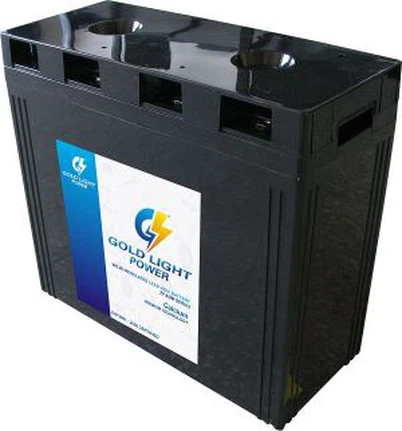
For example, in our 2V800AH AGM, Gel Rechargeable Battery Deep Cycle Solar Power Battery, we've optimized the design of the AGM separator to enhance ion mobility. This results in a more efficient charging process, reducing the time and energy required to reach full charge.

2. Charging Algorithm
The charging algorithm used to charge AGM batteries has a direct impact on their charge - discharge efficiency. AGM batteries typically require a multi - stage charging process, including bulk charging, absorption charging, and float charging.
During the bulk charging stage, a high current is applied to quickly charge the battery to about 80 - 90% of its capacity. However, if the charging current is too high, it can cause overheating and gassing, leading to energy losses and reduced battery life.
The absorption charging stage follows, where the charging voltage is maintained at a constant level while the current gradually decreases. This stage ensures that the battery is fully charged without overcharging. Finally, the float charging stage keeps the battery at a low - voltage level to maintain its charge and prevent self - discharge.
Our 2V600AH AGM Rechargeable Power Battery Valve Regulated Lead Aicd Battery for Long Life Battery is designed to work optimally with a specific charging algorithm. By following the recommended charging parameters, customers can achieve high charge - discharge efficiency and extend the battery's service life.
3. Temperature
Temperature is another critical factor that affects the charge - discharge efficiency of AGM batteries. In general, AGM batteries perform best at moderate temperatures, typically between 20°C and 25°C (68°F and 77°F).
At lower temperatures, the chemical reactions within the battery slow down, increasing the internal resistance and reducing the battery's capacity and charge - discharge efficiency. On the other hand, high temperatures can accelerate the self - discharge rate and cause the electrolyte to evaporate, leading to premature battery failure.
To mitigate the effects of temperature, proper thermal management is essential. This can include installing batteries in a temperature - controlled environment or using heat sinks and cooling systems.
4. Depth of Discharge (DOD)
The depth of discharge refers to the percentage of the battery's capacity that has been discharged. AGM batteries have a better charge - discharge efficiency when they are discharged to a shallower depth.
Deep discharges can cause irreversible damage to the battery plates, such as sulfation, which reduces the battery's capacity and efficiency over time. Therefore, it is recommended to limit the depth of discharge to no more than 50 - 70% for optimal performance and longevity.
Typical Charge - Discharge Efficiency Values of Wholesale AGM Batteries
Under ideal conditions, the charge - discharge efficiency of AGM batteries can range from 80% to 90%. However, in real - world applications, the efficiency may be lower due to factors such as temperature variations, charging methods, and the age of the battery.
Newer AGM batteries with advanced designs and materials tend to have higher charge - discharge efficiencies. As the battery ages, its efficiency may gradually decrease due to the accumulation of internal resistance and the degradation of the battery plates.
Importance of Charge - Discharge Efficiency for Wholesale Customers
For wholesale customers, the charge - discharge efficiency of AGM batteries is of utmost importance. Higher efficiency means lower energy costs, as less energy is wasted during the charging and discharging processes. This can result in significant savings over the lifetime of the battery, especially for large - scale applications such as solar power storage systems or backup power supplies.
In addition, batteries with high charge - discharge efficiency can provide more reliable power output. They can quickly respond to changes in load demand and maintain a stable voltage, ensuring the smooth operation of electrical equipment.
Conclusion
The charge - discharge efficiency of wholesale AGM batteries is influenced by multiple factors, including battery design, charging algorithm, temperature, and depth of discharge. As a wholesale supplier, we are committed to providing high - quality AGM batteries with excellent charge - discharge efficiency. Our 2V800AH AGM, Gel Rechargeable Battery Deep Cycle Solar Power Battery and 2V600AH AGM Rechargeable Power Battery Valve Regulated Lead Aicd Battery for Long Life Battery are designed to meet the diverse needs of our customers and deliver optimal performance.

If you are interested in purchasing our wholesale AGM batteries or have any questions about charge - discharge efficiency, please feel free to contact us for further discussion and negotiation. We look forward to working with you to find the best battery solutions for your applications.
References
- Linden, D., & Reddy, T. B. (2002). Handbook of Batteries. McGraw - Hill.
- Rand, D. A. J., Moseley, P. T., Garche, J., & Parker, C. (2004). Valve - Regulated Lead - Acid Batteries. Elsevier.