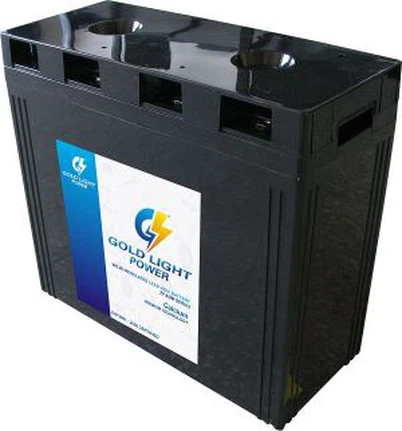
How does a lead battery work?
Leave a message

How does a lead battery work? This is a question that many people, especially those in the energy and power sectors, often ask. As a leading supplier of lead batteries, I am excited to share the inner workings of these remarkable energy storage devices.
The Basics of Lead Batteries
Lead batteries, also known as lead - acid batteries, have been around for a long time. They were first invented in 1859 by Gaston Planté, and since then, they have become one of the most widely used types of rechargeable batteries in the world. Their popularity stems from their relatively low cost, high reliability, and the ability to deliver high surge currents.
A lead battery consists of several key components: lead plates, an electrolyte solution, and a container. The lead plates are typically made of two different types: the positive plate is made of lead dioxide (PbO₂), and the negative plate is made of pure lead (Pb). The electrolyte solution is a mixture of sulfuric acid (H₂SO₄) and water (H₂O). The container is usually made of a durable plastic material that can withstand the corrosive nature of the electrolyte.
The Chemical Reactions During Discharge
When a lead battery is discharging, a series of chemical reactions take place within the battery. At the negative plate, the lead (Pb) reacts with the sulfate ions (SO₄²⁻) from the sulfuric acid in the electrolyte. The chemical equation for this reaction is:
Pb(s) + SO₄²⁻(aq) → PbSO₄(s) + 2e⁻
This reaction releases two electrons, which flow through an external circuit to provide electrical energy.


At the positive plate, the lead dioxide (PbO₂) reacts with hydrogen ions (H⁺) from the sulfuric acid and the electrons that have traveled through the external circuit. The chemical equation for this reaction is:
PbO₂(s) + 4H⁺(aq) + SO₄²⁻(aq) + 2e⁻ → PbSO₄(s) + 2H₂O(l)
As a result of these two reactions, both the positive and negative plates are converted into lead sulfate (PbSO₄), and water is produced. The overall chemical reaction for the discharge of a lead battery can be written as:
Pb(s) + PbO₂(s) + 2H₂SO₄(aq) → 2PbSO₄(s) + 2H₂O(l)
The Chemical Reactions During Charging
To recharge a lead battery, an external electrical source is applied to the battery. This reverses the chemical reactions that occurred during discharge. At the negative plate, the lead sulfate (PbSO₄) reacts with the electrons from the external circuit and hydrogen ions (H⁺) from the electrolyte to form lead (Pb) and sulfuric acid. The chemical equation is:
PbSO₄(s) + 2e⁻ + 2H⁺(aq) → Pb(s) + H₂SO₄(aq)
At the positive plate, the lead sulfate (PbSO₄) reacts with water and loses electrons to form lead dioxide (PbO₂) and sulfuric acid. The chemical equation is:
PbSO₄(s) + 2H₂O(l) → PbO₂(s) + 4H⁺(aq) + SO₄²⁻(aq) + 2e⁻
The overall chemical reaction for the charging of a lead battery is:
2PbSO₄(s) + 2H₂O(l) → Pb(s) + PbO₂(s) + 2H₂SO₄(aq)
Types of Lead Batteries
There are several types of lead batteries, each with its own characteristics and applications. One of the most common types is the flooded lead - acid battery. In a flooded battery, the electrolyte is in a liquid state, and the battery needs to be vented to allow the escape of gases produced during charging and discharging.
Another type is the valve - regulated lead - acid (VRLA) battery, which includes AGM (Absorbent Glass Mat) and gel batteries. AGM batteries use a fiberglass mat to hold the electrolyte in place, while gel batteries use a silica gel to immobilize the electrolyte. These batteries are sealed and maintenance - free, making them suitable for a wide range of applications.
For example, we offer 2V600AH AGM Rechargeable Power Battery Valve Regulated Lead Aicd Battery for Long Life Battery, which is designed for long - term use and can provide reliable power in various applications. Our 2V800AH AGM, Gel Rechargeable Battery Deep Cycle Solar Power Battery is specifically designed for solar power systems, with deep - cycle capabilities to withstand repeated charging and discharging.
Factors Affecting Lead Battery Performance
Several factors can affect the performance and lifespan of a lead battery. Temperature is one of the most important factors. High temperatures can accelerate the chemical reactions within the battery, leading to faster self - discharge and reduced battery life. On the other hand, low temperatures can increase the internal resistance of the battery, reducing its ability to deliver high currents.
The charging and discharging rates also play a crucial role. Overcharging a lead battery can cause the electrolyte to break down and produce hydrogen and oxygen gases, which can lead to water loss and damage to the battery. Undercharging, on the other hand, can result in the formation of lead sulfate crystals on the plates, a phenomenon known as sulfation, which can reduce the battery's capacity and performance.
Applications of Lead Batteries
Lead batteries are used in a wide variety of applications. One of the most common applications is in automotive vehicles. They are used to start the engine, power the lights, and operate other electrical systems in cars, trucks, and motorcycles.
Lead batteries are also widely used in uninterruptible power supply (UPS) systems. These systems provide backup power in case of a power outage, ensuring that critical equipment such as computers, servers, and medical devices can continue to operate.
In the renewable energy sector, lead batteries are used to store energy generated by solar panels and wind turbines. They can store the excess energy during periods of high production and release it when the demand is high or when the renewable energy source is not available.
Conclusion
In conclusion, lead batteries are a reliable and cost - effective energy storage solution. Understanding how they work is essential for anyone who uses or supplies these batteries. Whether you are an automotive manufacturer, a data center operator, or a renewable energy developer, lead batteries can provide the power you need.
If you are interested in our lead battery products, we invite you to contact us for procurement and further discussions. We have a wide range of lead battery products to meet your specific needs, and our team of experts is ready to assist you.
References
- Linden, D., & Reddy, T. B. (2002). Handbook of Batteries. McGraw - Hill.
- Berndt, D. (2000). The Lead - Acid Battery: Science and Technology. Elsevier.