How to calculate the capacity of an AGM battery needed for a solar project?
Leave a message

Hey there, solar enthusiasts! As an AGM battery supplier, I've been getting tons of questions lately about how to calculate the capacity of an AGM battery needed for a solar project. It's a crucial step in setting up a successful solar power system, so I thought I'd share some tips and tricks to help you out.
Understanding the Basics
First things first, let's talk about what AGM batteries are and why they're a great choice for solar projects. AGM stands for Absorbent Glass Mat, which is a type of lead-acid battery. These batteries are sealed, maintenance-free, and have a high energy density, making them perfect for storing solar energy.
One of the main advantages of AGM batteries is their deep cycling ability. This means they can be discharged and recharged multiple times without losing their capacity. They're also resistant to vibration and shock, which is important if you're installing your solar system in a mobile or off-grid location.
Factors to Consider
Now that you know why AGM batteries are a good choice, let's talk about the factors you need to consider when calculating the capacity of the battery you need for your solar project.
1. Energy Consumption
The first thing you need to do is determine your energy consumption. This includes all the electrical appliances and devices you plan to power with your solar system. Make a list of everything you'll be using, along with their power ratings (in watts) and the average number of hours you'll be using them each day.
For example, let's say you have a refrigerator that uses 150 watts and runs for 24 hours a day, a TV that uses 100 watts and runs for 4 hours a day, and a few lights that use a total of 50 watts and run for 6 hours a day. Your total daily energy consumption would be:
(150 watts x 24 hours) + (100 watts x 4 hours) + (50 watts x 6 hours) = 3600 watt-hours + 400 watt-hours + 300 watt-hours = 4300 watt-hours
2. Solar Panel Output
The next thing you need to consider is the output of your solar panels. This will depend on the size and efficiency of your panels, as well as the amount of sunlight your location receives.
To determine the output of your solar panels, you can use a solar panel calculator or consult with a solar installer. Let's say you have a solar panel system that produces an average of 5000 watt-hours of energy per day.
3. Battery Depth of Discharge (DoD)
The depth of discharge (DoD) is the percentage of the battery's capacity that you can safely use without damaging the battery. Most AGM batteries have a recommended DoD of 50% to 80%.
For example, if you have a 100Ah battery with a DoD of 50%, you can safely use 50Ah of the battery's capacity before recharging it.
4. Battery Efficiency
The efficiency of the battery is another important factor to consider. This refers to the amount of energy that is lost during the charging and discharging process. Most AGM batteries have an efficiency of around 80% to 90%.


Calculating the Battery Capacity
Now that you have all the information you need, you can calculate the capacity of the battery you need for your solar project. Here's the formula:
Battery Capacity (Ah) = (Daily Energy Consumption (Wh) / Battery Voltage (V)) / DoD / Battery Efficiency
Let's use the example above to calculate the battery capacity we need:
- Daily Energy Consumption: 4300 watt-hours
- Battery Voltage: Let's assume we're using a 12V battery
- DoD: 50%
- Battery Efficiency: 80%
Battery Capacity (Ah) = (4300 watt-hours / 12 volts) / 0.5 / 0.8 = 4300 / 12 / 0.5 / 0.8 = 895.83 Ah
So, in this example, we would need a battery with a capacity of at least 895.83Ah to meet our daily energy needs.
Choosing the Right Battery
Once you've calculated the battery capacity you need, it's time to choose the right battery for your solar project. There are many different types and sizes of AGM batteries available, so it's important to choose one that meets your specific needs.
Some of the factors you should consider when choosing a battery include:
- Capacity: Make sure the battery has enough capacity to meet your daily energy needs.
- Voltage: Choose a battery with the right voltage for your solar system. Most solar systems use 12V, 24V, or 48V batteries.
- Depth of Discharge (DoD): Look for a battery with a high DoD to ensure you can use more of the battery's capacity.
- Cycle Life: The cycle life refers to the number of times the battery can be discharged and recharged before it needs to be replaced. Look for a battery with a long cycle life to ensure it lasts for many years.
- Brand and Quality: Choose a reputable brand and high-quality battery to ensure reliability and performance.
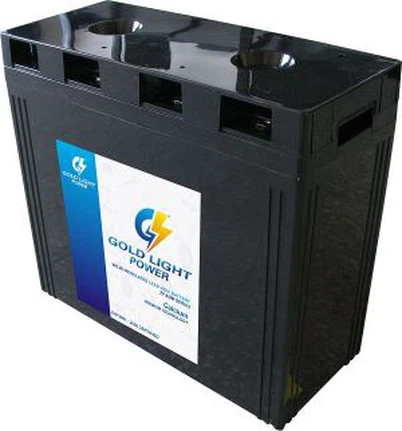
As an AGM battery supplier, I can offer you a wide range of high-quality AGM batteries to choose from. For example, we have the 2V800AH AGM, Gel Rechargeable Battery Deep Cycle Solar Power Battery and the 2V600AH AGM Rechargeable Power Battery Valve Regulated Lead Aicd Battery for Long Life Battery. These batteries are designed for deep cycling and are perfect for solar projects.
Conclusion
Calculating the capacity of an AGM battery needed for a solar project is an important step in setting up a successful solar power system. By considering factors such as energy consumption, solar panel output, battery depth of discharge, and battery efficiency, you can choose the right battery for your needs.
If you have any questions or need help choosing the right battery for your solar project, please don't hesitate to contact me. I'm here to help you make the most of your solar energy system.
References
- Solar Energy International. (n.d.). Solar Electric System Sizing. Retrieved from [Website URL]
- Battery University. (n.d.). Understanding Depth of Discharge. Retrieved from [Website URL]