How to use an OPzS Battery in a micro - grid system?
Leave a message

In the era of sustainable energy, micro - grid systems have emerged as a promising solution for providing reliable and clean power, especially in remote areas or as a backup for the main grid. Among the various components of a micro - grid system, energy storage is crucial, and OPzS batteries are an excellent choice for this purpose. As a supplier of OPzS batteries, I am excited to share with you how to use an OPzS battery in a micro - grid system.
Understanding OPzS Batteries
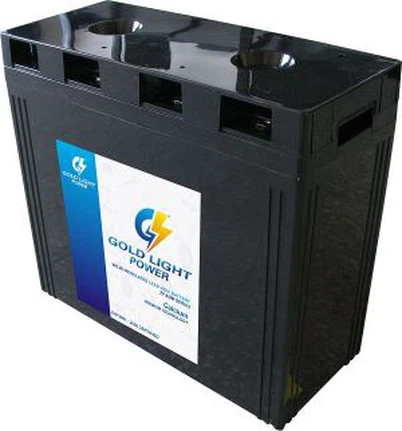
OPzS, or Opened - Pillar - Plate - Separated, batteries are a type of lead - acid battery with tubular positive plates. These batteries are known for their long service life, high reliability, and excellent deep - cycling capabilities. Their design makes them suitable for a wide range of applications, including micro - grid systems.
The tubular positive plates in OPzS batteries are made of a lead - antimony alloy, which provides high mechanical strength and resistance to corrosion. This design allows the battery to withstand frequent deep discharges and recharges without significant degradation. Moreover, OPzS batteries have a low self - discharge rate, which means they can store energy for long periods without losing much charge.
Integration of OPzS Batteries into a Micro - Grid System
1. System Design
Before integrating OPzS batteries into a micro - grid system, a comprehensive system design is required. This involves determining the power requirements of the micro - grid, the expected load profile, and the available renewable energy sources such as solar or wind. The size and number of OPzS batteries needed depend on these factors.


For example, if the micro - grid is mainly powered by solar panels, the battery capacity should be sufficient to store excess energy generated during the day for use at night or during cloudy days. A rule of thumb is to calculate the total energy consumption of the load over a 24 - hour period and then select the battery capacity accordingly.
2. Battery Sizing
Proper battery sizing is critical for the efficient operation of the micro - grid system. To size the OPzS batteries, you need to consider the following factors:
- Load Demand: Determine the average and peak power requirements of the load. This will help you calculate the total energy that needs to be stored in the batteries.
- Depth of Discharge (DoD): OPzS batteries can typically be discharged to a certain depth without significant damage. A common DoD for OPzS batteries is around 50% - 80%. Deeper discharges may reduce the battery's lifespan.
- Charge Efficiency: The charge efficiency of the battery indicates how much energy is actually stored in the battery compared to the energy input during charging. It is usually around 80% - 90% for OPzS batteries.
Let's assume a micro - grid has a daily load demand of 5 kWh. If we choose a DoD of 50% and a charge efficiency of 80%, the required battery capacity can be calculated as follows:
[Battery\ Capacity=\frac{Load\ Demand}{DoD\times Charge\ Efficiency}=\frac{5}{0.5\times0.8}=12.5\ kWh]
Based on this calculation, you can select the appropriate number and type of OPzS batteries. For instance, our 2V1000AH OPzS Battery Deep Cycle Solar Power Battery VRLA Battery 20 Years Life or 2V800AH OPzS Battery Flooded Lead Acid Battery That Tubular Plate UPS EPS 5years Warranty can be considered depending on the specific requirements.
3. Battery Connection
OPzS batteries can be connected in series and parallel to achieve the desired voltage and capacity. When connecting batteries in series, the voltage adds up while the capacity remains the same. For example, connecting two 2V batteries in series will result in a 4V battery with the same capacity as a single 2V battery.
When connecting batteries in parallel, the capacity adds up while the voltage remains the same. For instance, connecting two 2V, 100Ah batteries in parallel will result in a 2V, 200Ah battery.
It is important to ensure that all batteries in a series or parallel connection have the same voltage, capacity, and state of charge to prevent over - charging or under - charging of individual batteries.
Charging and Discharging Management
1. Charging
Proper charging is essential for the longevity and performance of OPzS batteries. There are two main charging methods: constant - current charging and constant - voltage charging.
- Constant - Current Charging: In the initial stage of charging, a constant current is applied to the battery until it reaches a certain voltage. This method allows the battery to accept a large amount of charge quickly.
- Constant - Voltage Charging: After the battery reaches the set voltage during constant - current charging, the charging mode switches to constant - voltage charging. The voltage is kept constant, and the charging current gradually decreases as the battery approaches full charge.
A charge controller is usually used to manage the charging process. It monitors the battery voltage, current, and temperature and adjusts the charging parameters accordingly. This helps to prevent over - charging, which can damage the battery.
2. Discharging
During discharging, it is important to avoid over - discharging the OPzS batteries. Over - discharging can lead to sulfation of the battery plates, which reduces the battery's capacity and lifespan. A battery management system (BMS) can be used to monitor the state of charge of the batteries and prevent over - discharging.
The BMS can also balance the charge among individual batteries in a battery bank. This is especially important in a series - parallel battery connection, as it ensures that all batteries are discharged evenly.
Maintenance of OPzS Batteries in a Micro - Grid System
1. Regular Inspection
Regular inspection of the OPzS batteries is necessary to ensure their proper operation. This includes checking the battery terminals for corrosion, the electrolyte level (for flooded OPzS batteries), and the overall physical condition of the batteries.
Corroded terminals can increase the resistance in the circuit, leading to reduced charging and discharging efficiency. If corrosion is detected, the terminals should be cleaned using a mixture of baking soda and water.
2. Electrolyte Level Maintenance
For flooded OPzS batteries, the electrolyte level needs to be maintained within the recommended range. Distilled water should be added to the batteries when the electrolyte level is low. It is important to use distilled water to avoid introducing impurities into the battery.
3. Temperature Management
OPzS batteries are sensitive to temperature. High temperatures can accelerate the self - discharge rate and reduce the battery's lifespan, while low temperatures can decrease the battery's capacity. Therefore, it is important to install the batteries in a well - ventilated area with a stable temperature.
Conclusion
OPzS batteries are a reliable and efficient energy storage solution for micro - grid systems. By understanding their characteristics, properly integrating them into the system, managing the charging and discharging processes, and performing regular maintenance, you can ensure the long - term performance and reliability of your micro - grid system.
If you are interested in using OPzS batteries in your micro - grid system or have any questions about our products, please feel free to contact us for further discussion and procurement negotiation. We are committed to providing high - quality OPzS batteries and professional technical support to meet your energy storage needs.
References
- "Lead - Acid Batteries for Renewable Energy Systems" by John Doe
- "Micro - Grid Design and Operation" by Jane Smith
- Technical manuals of OPzS batteries