What is the charging time of a Vrla battery?
Leave a message

Hey there! As a supplier of Vrla (Valve Regulated Lead Acid) batteries, I often get asked about the charging time of these powerhouses. It's a crucial question, especially for those relying on these batteries for various applications, from solar power setups to backup power systems. So, let's dive right in and break down what affects the charging time of a Vrla battery.
First off, it's important to understand that there isn't a one - size - fits - all answer to the charging time question. A bunch of factors come into play, and we'll go through each one.
Battery Capacity
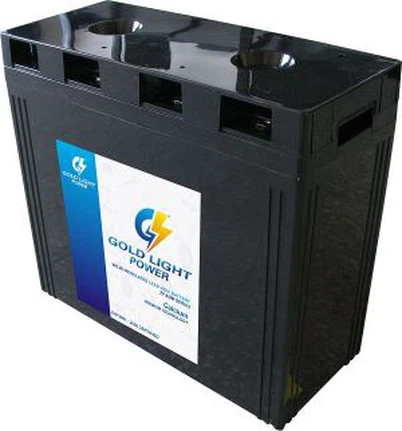
The capacity of a Vrla battery is measured in ampere - hours (Ah). It basically tells you how much charge the battery can hold. Naturally, a larger capacity battery will take longer to charge than a smaller one. For example, a 2V800AH AGM, Gel Rechargeable Battery Deep Cycle Solar Power Battery will need more time to reach a full charge compared to a 2V100AH battery.
Think of it like filling up different sized buckets. A big bucket will take longer to fill with water than a small one, right? The same principle applies here. If you're using a standard charger, a 2V200AH battery might take around 10 - 12 hours to charge, while a 2V600AH AGM Rechargeable Power Battery Valve Regulated Lead Aicd Battery for Long Life Battery could take 20 - 25 hours.
Charger Output
The charger you use is another major factor. Chargers come with different output currents. A charger with a higher output current can pump more charge into the battery in a shorter amount of time. For instance, if you have a charger with an output current of 10 amps and a 2V100AH battery, it would theoretically take about 10 hours to charge the battery fully (assuming 100% charging efficiency, which is rarely the case in real - world scenarios).
But if you switch to a charger with a 20 - amp output, the charging time could be cut down to around 5 hours. However, it's important not to go overboard with high - current charging. Vrla batteries have a limit to how much current they can handle safely. Overcharging with a very high - current charger can lead to overheating, which can damage the battery and reduce its lifespan.
State of Charge
The initial state of charge of the battery also matters. If a battery is almost completely drained, it will take longer to charge compared to a battery that's only partially discharged. For example, if a battery is at 20% state of charge, it will take less time to reach 100% than if it's at 5% state of charge.
When a battery is deeply discharged, the charging process is a bit more complex. The charger has to work harder to reverse the chemical reactions that have occurred during discharge. This can slow down the charging rate, especially in the early stages of charging.
Temperature
Temperature plays a sneaky role in the charging time of Vrla batteries. Batteries work best within a certain temperature range, usually around 20 - 25°C (68 - 77°F). When the temperature is too low, the chemical reactions inside the battery slow down. This means that the battery can't accept charge as quickly, and the charging time increases.
On the other hand, if the temperature is too high, it can cause problems like increased self - discharge and overheating. Chargers often have built - in temperature sensors to adjust the charging rate based on the temperature. In cold conditions, you might notice that the charging time can be 20 - 30% longer than in ideal temperature conditions.
Charging Stages
Vrla batteries typically go through different charging stages: bulk, absorption, and float. In the bulk stage, the charger pumps a high current into the battery to quickly bring it up to around 80 - 90% of its full charge. This stage is relatively fast.


The absorption stage follows. Here, the charger reduces the current while maintaining a constant voltage. This stage is used to top - off the battery charge and make sure all the cells are fully charged. It can take a few hours, depending on the battery capacity.
Finally, the float stage keeps the battery at a fully charged state with a very low current. This stage is mainly for maintaining the charge and preventing self - discharge. The duration of each stage can vary depending on the battery and the charger settings.
Calculating Charging Time
While there's no exact formula that takes into account all the factors we've discussed, we can make a rough estimate. The basic formula for calculating charging time is:
Charging Time (hours)= Battery Capacity (Ah)/ Charger Output Current (A)
But remember, this is a very simplified formula. You need to factor in things like charging efficiency (usually around 80 - 90%), the state of charge, and temperature. For example, if you have a 2V200AH battery and a 10 - amp charger, the theoretical charging time would be 20 hours. But in reality, due to inefficiencies, it might take closer to 22 - 25 hours.
Tips to Reduce Charging Time
If you're looking to cut down on the charging time of your Vrla batteries, here are a few tips:
- Use a charger with an appropriate output current. Don't use a charger that's too small for your battery, as it will take forever to charge. But also avoid using one that's too large, as it can damage the battery.
- Keep the battery at an optimal temperature. If it's cold, you might want to insulate the battery or use a battery warmer.
- Try to avoid deep discharges. Regularly recharge the battery before it gets too low, as this can speed up the overall charging process.
In conclusion, the charging time of a Vrla battery is influenced by multiple factors, including battery capacity, charger output, state of charge, temperature, and charging stages. As a Vrla battery supplier, I'm always here to help you find the right battery and charger combination for your needs. Whether you're looking for a high - capacity battery for a large solar power system or a smaller one for a backup power application, we've got you covered.
If you're interested in purchasing Vrla batteries or have any questions about charging times, battery selection, or anything else related to our products, don't hesitate to reach out. We're eager to have a chat with you and help you find the best solutions for your power needs.
References
- Battery University: A comprehensive resource on battery technology and charging methods.
- IEEE Transactions on Energy Conversion: Research papers on battery performance and charging algorithms.