What is the convergence rate of Agm?
Leave a message

As an AGM (Absorbent Glass Mat) battery supplier, I've been deeply involved in the industry, constantly exploring and understanding the various aspects of AGM batteries. One of the most intriguing questions that often comes up in technical discussions is about the convergence rate of AGM.
Understanding the Basics of AGM Batteries
Before delving into the convergence rate, it's essential to understand what AGM batteries are. AGM batteries are a type of valve - regulated lead - acid (VRLA) battery. They use a fiberglass mat to absorb the electrolyte, which immobilizes it. This design offers several advantages, such as being spill - proof, maintenance - free, and having a relatively long service life.
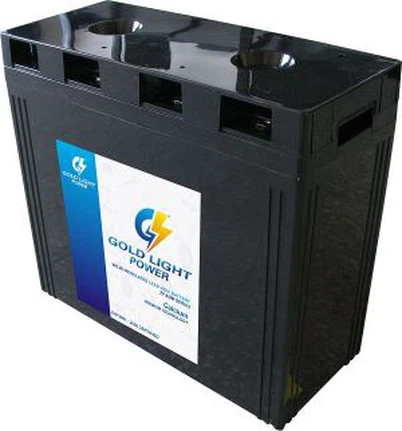
The 2V600AH AGM Rechargeable Power Battery Valve Regulated Lead Aicd Battery for Long Life Battery and 2V800AH AGM, Gel Rechargeable Battery Deep Cycle Solar Power Battery are two of the popular products in our portfolio. These batteries are designed to meet different power requirements, whether it's for long - term energy storage or deep - cycle applications like solar power systems.
What is Convergence Rate in AGM Batteries?
The convergence rate in AGM batteries refers to the speed at which the battery reaches a stable state during charging or discharging processes. In a charging scenario, it's about how quickly the battery voltage, state of charge (SOC), and internal chemical reactions reach an equilibrium point. For discharging, it's the rate at which the battery parameters stabilize as it provides power to a load.
Several factors influence the convergence rate of AGM batteries. One of the primary factors is the battery's internal resistance. A lower internal resistance allows for faster charge and discharge rates, leading to a quicker convergence. This is because less energy is wasted as heat during the electrical transfer process, enabling the battery to reach its stable state more rapidly.
The design of the AGM battery, including the thickness and porosity of the fiberglass mat, also plays a crucial role. A well - designed mat allows for better electrolyte distribution and ion movement, facilitating faster chemical reactions and, consequently, a higher convergence rate. Additionally, the quality of the lead plates used in the battery can affect the convergence rate. High - purity lead plates have fewer impurities, which can enhance the electrochemical reactions and improve the overall performance of the battery.
Measuring the Convergence Rate
Measuring the convergence rate of AGM batteries is a complex process that involves monitoring multiple parameters over time. One common method is to measure the battery voltage and current during charging and discharging cycles. By analyzing the rate of change of these parameters, we can estimate how quickly the battery is approaching its stable state.
Another approach is to use advanced battery management systems (BMS). These systems can continuously monitor the battery's SOC, temperature, and other critical parameters. They can also provide real - time data on the convergence rate, allowing for better control and optimization of the battery's performance.
Importance of Convergence Rate in Practical Applications
The convergence rate of AGM batteries has significant implications in various practical applications. In renewable energy systems, such as solar and wind power, a high convergence rate is crucial for efficient energy storage. When the sun is shining or the wind is blowing, the battery needs to quickly absorb the excess energy and reach a stable state. This ensures that the stored energy can be used effectively when the renewable energy source is not available.
In automotive applications, a fast convergence rate is essential for starting the vehicle quickly. When the ignition is turned on, the battery needs to provide a large amount of current in a short period. A battery with a high convergence rate can respond rapidly to this demand, ensuring reliable starting performance.
Improving the Convergence Rate
As a supplier, we are constantly looking for ways to improve the convergence rate of our AGM batteries. One approach is through research and development of new materials. For example, we are exploring the use of advanced lead alloys that can reduce the internal resistance of the battery. These alloys have better electrical conductivity, which allows for faster charge and discharge rates.
We are also investing in improving the manufacturing process of the fiberglass mat. By optimizing the porosity and thickness of the mat, we can enhance the electrolyte distribution and ion movement, leading to a higher convergence rate. Additionally, we are working on developing more advanced BMS that can better control the charging and discharging processes, further improving the battery's performance.


Real - World Examples
Let's take a look at some real - world examples to illustrate the importance of convergence rate. In a large - scale solar power storage system, we installed our 2V800AH AGM, Gel Rechargeable Battery Deep Cycle Solar Power Battery. The system was designed to store excess solar energy during the day and supply it to the grid at night. With a high convergence rate, the batteries were able to quickly absorb the solar energy during the day and reach a stable state. This ensured that the stored energy could be efficiently discharged at night, meeting the grid's power requirements.
In an automotive application, a car equipped with our AGM battery had excellent starting performance. The battery's high convergence rate allowed it to provide a large amount of current immediately when the ignition was turned on, ensuring reliable starting even in cold weather conditions.
Conclusion
In conclusion, the convergence rate of AGM batteries is a critical parameter that affects their performance in various applications. As a supplier, we understand the importance of this rate and are committed to developing products with high convergence rates. Our 2V600AH AGM Rechargeable Power Battery Valve Regulated Lead Aicd Battery for Long Life Battery and 2V800AH AGM, Gel Rechargeable Battery Deep Cycle Solar Power Battery are designed with the latest technologies to ensure fast and efficient convergence.
If you are interested in learning more about our AGM batteries or have specific requirements for your application, we invite you to contact us for a detailed discussion and potential procurement. Our team of experts is ready to provide you with the best solutions to meet your energy storage needs.
References
- Linden, D., & Reddy, T. B. (2002). Handbook of Batteries. McGraw - Hill.
- Berndt, D. (2011). Valve - Regulated Lead - Acid Batteries. John Wiley & Sons.
- Rand, D. A. J., Moseley, P. T., Garche, J., & Parker, C. (2004). Valve - Regulated Lead - Acid Batteries: Principles and Practice. Elsevier.