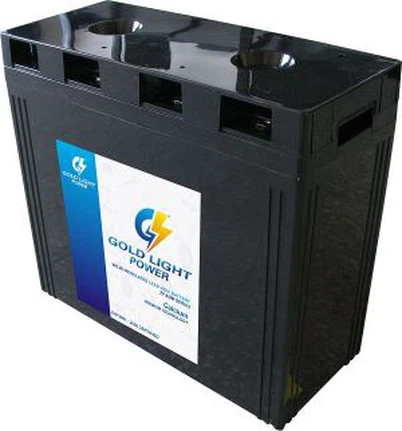
What is the discharging process of an Smf Battery?
Leave a message

Yo, what's up everyone! As a supplier of SMF (Sealed Maintenance-Free) batteries, I get asked a lot about how these batteries work, especially the discharging process. So, I thought I'd break it down for you in this blog post.
First off, let's talk a bit about what an SMF battery is. SMF batteries are a type of lead - acid battery. They're called "sealed" because they're designed to be maintenance - free. You don't have to add water to them like you do with some other types of lead - acid batteries. They're used in a whole bunch of applications, from cars to backup power systems.
Now, let's get into the discharging process. When an SMF battery is connected to a load (like a car's electrical system or a backup power device), a chemical reaction starts happening inside the battery. This chemical reaction is what creates the electrical energy that powers the load.
Inside an SMF battery, there are two main components: the positive plates and the negative plates. The positive plates are made of lead dioxide (PbO₂), and the negative plates are made of pure lead (Pb). These plates are immersed in an electrolyte solution, which is usually a mixture of sulfuric acid (H₂SO₄) and water (H₂O).


When the battery starts to discharge, the sulfuric acid in the electrolyte reacts with the lead on the negative plates and the lead dioxide on the positive plates. At the negative plate, the lead reacts with the sulfate ions from the sulfuric acid. The chemical equation for this reaction is:
Pb + H₂SO₄ → PbSO₄+ 2H⁺ + 2e⁻
This reaction releases electrons (e⁻), which flow through the external circuit to the load, providing electrical power. At the same time, the hydrogen ions (H⁺) move through the electrolyte towards the positive plate.
On the positive plate, the lead dioxide reacts with the hydrogen ions and the sulfate ions from the sulfuric acid. The chemical equation for this reaction is:
PbO₂ + 4H⁺+ H₂SO₄ + 2e⁻ → PbSO₄+ 2H₂O
As you can see from these reactions, during the discharging process, both the positive and negative plates are converted into lead sulfate (PbSO₄), and water is produced. This is why the specific gravity of the electrolyte (which is a measure of the concentration of sulfuric acid) decreases as the battery discharges.
The rate of discharge depends on a few factors. One of the main factors is the load connected to the battery. If the load has a high power requirement, the battery will discharge more quickly. For example, if you're using a lot of electrical accessories in your car at the same time, like the headlights, radio, and air - conditioning, the battery will discharge faster than if you're just using the basic ignition system.
Another factor that affects the discharging process is the temperature. Batteries generally discharge more slowly in cold temperatures. This is because the chemical reactions inside the battery slow down at lower temperatures. So, if you live in a cold climate, you might notice that your battery doesn't last as long in the winter as it does in the summer.
Now, let me tell you about some of the SMF batteries we offer. We have some really great options, like the Korean 12v88ah Standard Lead Acid Mf Car Battery MF DIN. This battery is a great choice for cars, offering reliable power and long - lasting performance. It's designed to handle the demands of modern vehicles, with a high capacity to keep your car's electrical system running smoothly.
We also have the Din75 12V75Ah MF Good Performance Car Battery. This battery is perfect for those who need a battery with good performance and a reasonable price. It's suitable for a wide range of cars and can provide consistent power even under heavy use.
And if you're looking for a battery at a wholesale price, check out our Wholesale Price Mf Car Battery 12v70ah 80D26R Type JIS Standard Automobile Battery. This battery offers great value for money and meets the JIS standard, which means it's of high quality.
As the battery discharges further, the amount of lead sulfate on the plates increases, and the amount of sulfuric acid in the electrolyte decreases. Eventually, if the battery is discharged too much, it can reach a state called "deep discharge." A deep - discharged battery can cause some problems. The lead sulfate can harden on the plates, making it difficult for the battery to recharge fully. This can reduce the battery's capacity and lifespan.
To avoid deep - discharging your SMF battery, it's important to monitor the battery's state of charge. You can use a battery charger with a built - in charge indicator or a multimeter to measure the battery's voltage. A fully - charged SMF battery typically has a voltage of around 12.6 - 12.8 volts. As the battery discharges, the voltage will drop. When the voltage drops below 11.8 volts, it's a sign that the battery is getting close to being fully discharged.
If you're in the market for SMF batteries, whether it's for your car or a backup power system, we've got you covered. Our batteries are of high quality, and we offer competitive prices. If you're interested in learning more about our products or want to place an order, don't hesitate to reach out. We're here to help you find the right battery for your needs.
In conclusion, understanding the discharging process of an SMF battery is important for getting the most out of your battery. By knowing how the battery works, you can take better care of it and ensure that it lasts as long as possible. So, if you have any questions or need more information, just let us know. We're always happy to assist you in your battery - buying journey.
References
- Linden, D., & Reddy, T. B. (2002). Handbook of Batteries. McGraw - Hill.
- Berndt, D. (2000). Lead - Acid Batteries: Science and Technology. Springer.