What is the maximum discharge current for an OPzS Battery?
Leave a message

Hey there! As a supplier of OPzS batteries, I often get asked about the maximum discharge current for these batteries. So, I thought I'd write this blog post to share some insights on this topic.
First off, let's understand what OPzS batteries are. OPzS stands for "Oval Positive tubular plate, Sealed (in some cases, but they are typically flooded lead - acid batteries)". These batteries are known for their long - life, deep - cycle capabilities, and are commonly used in applications like UPS (Uninterruptible Power Supply), EPS (Emergency Power Supply), and solar power systems.
The maximum discharge current of an OPzS battery isn't a one - size - fits - all value. It depends on several factors. One of the most important factors is the battery's capacity. A larger - capacity battery can generally handle a higher discharge current compared to a smaller - capacity one.
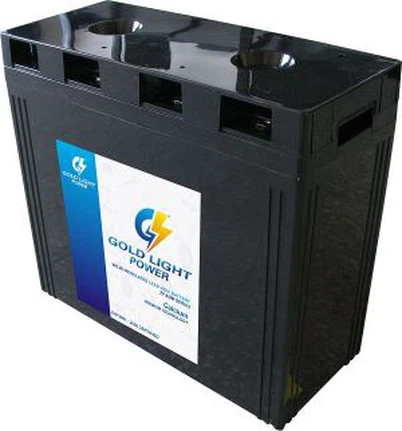
For example, let's take a look at our 2V800AH OPzS Battery Flooded Lead Acid Battery That Tubular Plate UPS EPS 5years Warranty. With a capacity of 800Ah, it can handle a relatively high discharge current compared to a lower - capacity battery. This battery is designed for applications where a significant amount of power needs to be delivered in a short period, like in large - scale UPS systems.
Another factor that affects the maximum discharge current is the battery's internal resistance. Batteries with lower internal resistance can discharge at higher currents more efficiently. The internal resistance of an OPzS battery is influenced by its design, the materials used, and its state of charge. When a battery is fully charged, its internal resistance is usually lower, allowing for a higher maximum discharge current.


The temperature also plays a crucial role. In general, as the temperature increases, the battery's internal resistance decreases, and it can handle a higher discharge current. However, extremely high temperatures can also cause damage to the battery over time. On the other hand, at low temperatures, the internal resistance increases, and the maximum discharge current that the battery can safely handle decreases.
The age and condition of the battery are also significant. A brand - new, well - maintained battery will have a higher maximum discharge current compared to an old or damaged one. Over time, the plates inside the battery can degrade, and the electrolyte can lose its effectiveness, which can reduce the battery's ability to discharge at high currents.
Now, let's talk about some general guidelines for maximum discharge current. For most OPzS batteries, the maximum continuous discharge current is often specified as a multiple of the battery's C - rate. The C - rate is a measure of the rate at which a battery is charged or discharged relative to its capacity. For example, a 1C discharge rate means that the battery is being discharged at a rate that would fully discharge it in 1 hour.
Typically, OPzS batteries can handle a continuous discharge current of around 0.2C to 0.5C without any major issues. So, for a 1000Ah battery, the continuous discharge current could range from 200A (0.2C) to 500A (0 .5C). However, for short - term or pulse discharges, the battery can handle much higher currents. In some cases, it can handle up to 2C or even 3C for a very short period, say a few seconds.
Our 2V1000AH OPzS Battery Deep Cycle Solar Power Battery VRLA Battery 20 Years Life is a great example. It's designed for deep - cycle applications in solar power systems, where it may need to deliver high - current pulses during times of high power demand.
When you're using OPzS batteries in your application, it's essential to stay within the recommended maximum discharge current limits. Exceeding these limits can lead to several problems. Firstly, it can cause excessive heating of the battery, which can damage the internal components and reduce the battery's lifespan. Secondly, it can lead to a rapid drop in the battery's voltage, which may not provide the stable power that your equipment needs.
If you're unsure about the maximum discharge current for a specific application, it's always a good idea to consult with us. We have a team of experts who can help you select the right battery and determine the appropriate discharge current based on your specific requirements.
We understand that different applications have different power demands. Whether you're setting up a small - scale UPS for a home office or a large - scale solar power system for an industrial facility, we have the right OPzS battery for you. Our batteries are designed and manufactured to the highest standards, ensuring reliable performance and long - term durability.
If you're in the market for OPzS batteries, don't hesitate to get in touch with us. We can provide you with detailed technical specifications, answer any questions you may have, and help you find the best solution for your power needs. Whether you need a single battery or a large battery bank, we're here to assist you every step of the way.
In conclusion, the maximum discharge current for an OPzS battery depends on multiple factors such as capacity, internal resistance, temperature, and the battery's age and condition. By understanding these factors and following the recommended guidelines, you can ensure that your OPzS battery performs optimally and lasts for a long time. So, if you're looking for high - quality OPzS batteries with excellent performance, give us a shout. We're ready to help you power your world!
References:
- Battery Technology Handbook
- Industry standards for lead - acid batteries