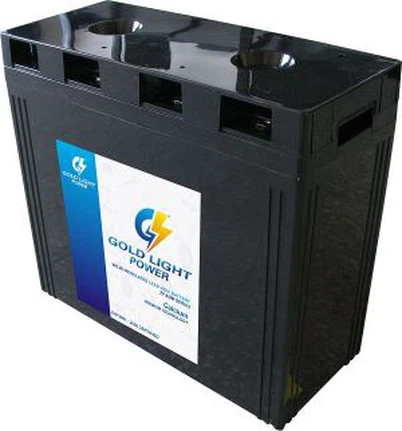
What is the difference between a Gel Battery and an AGM battery?
Leave a message

When it comes to batteries, especially in the realm of deep - cycle applications such as solar power storage and backup power systems, Gel Batteries and AGM (Absorbent Glass Mat) Batteries are two popular choices. As a Gel Battery supplier, I've encountered numerous inquiries regarding the differences between these two types of batteries. In this blog post, I'll delve into the key disparities, helping you make an informed decision for your specific needs.
1. Electrolyte Composition
One of the most fundamental differences between Gel Batteries and AGM Batteries lies in their electrolyte composition.
Gel Batteries use a silica - based gel to suspend the electrolyte. The gel is formed by adding fumed silica to the sulfuric acid electrolyte. This gel immobilizes the electrolyte, preventing it from flowing freely. As a result, Gel Batteries are spill - proof and can be installed in various orientations without the risk of acid leakage. For example, in off - grid solar installations where the battery may be placed in an awkward or inclined position, a Gel Battery provides a reliable solution. You can check out our 12V24AH Solar Battery Sealed GEL Battery Standard Vrla Products which showcases the spill - proof advantage of our Gel Batteries.
On the other hand, AGM Batteries use an absorbent glass mat separator. The mat is saturated with the sulfuric acid electrolyte, which is absorbed into the fine glass fibers. This design also effectively immobilizes the electrolyte, making AGM Batteries also spill - proof. However, the way the electrolyte is held in the AGM Batteries is different from that in Gel Batteries.


2. Charging Characteristics
Charging is a crucial aspect when considering a battery. Gel Batteries and AGM Batteries have distinct charging requirements.
Gel Batteries are more sensitive to overcharging. They require a lower charging voltage compared to AGM Batteries. A typical Gel Battery should be charged at a voltage around 14.1 - 14.4 volts for a 12 - volt battery. Overcharging a Gel Battery can cause the gel to dry out and crack, which will significantly reduce the battery's lifespan. Therefore, a proper charging controller is essential for Gel Batteries. Our 12V38AH Solar GEL Battery Standard Storage Battery Products come with detailed charging instructions to ensure optimal performance.
AGM Batteries, in contrast, can tolerate slightly higher charging voltages. They can be charged at around 14.4 - 14.8 volts for a 12 - volt battery. This makes AGM Batteries more forgiving when it comes to charging, and they can be used with a wider range of charging systems. However, it's still important to use a suitable charger to avoid overcharging and premature battery failure.
3. Discharge Performance
The discharge performance of Gel Batteries and AGM Batteries also varies.
Gel Batteries are known for their deep - discharge capabilities. They can be discharged to a lower state of charge (SOC) without significant damage. In fact, Gel Batteries can often be discharged up to 80% of their capacity. This makes them ideal for applications where deep discharges are common, such as in some off - grid solar systems where the battery may need to provide power for extended periods during cloudy days.
AGM Batteries, while also capable of deep discharges, are generally recommended to be discharged to a maximum of 50 - 60% of their capacity. Frequent deep discharges can reduce the lifespan of an AGM Battery. They are better suited for applications where shallow discharges are more common, like in some backup power systems that only need to provide power for a short time during a power outage.
4. Temperature Sensitivity
Temperature can have a significant impact on battery performance, and Gel Batteries and AGM Batteries respond differently to temperature changes.
Gel Batteries perform well in a relatively wide temperature range. They have better low - temperature performance compared to AGM Batteries. In cold weather, Gel Batteries can maintain a more stable voltage output and are less likely to suffer from reduced capacity. However, at high temperatures, Gel Batteries can be more sensitive. Excessive heat can accelerate the chemical reactions inside the battery, leading to faster degradation of the gel and a shorter lifespan.
AGM Batteries are more sensitive to low temperatures. Cold weather can cause a significant drop in their capacity and voltage output. On the other hand, they can tolerate higher temperatures better than Gel Batteries. In high - temperature environments, AGM Batteries are less likely to experience the same level of degradation as Gel Batteries.
5. Lifespan
The lifespan of a battery is an important consideration for any user.
Gel Batteries generally have a longer lifespan when properly maintained. With correct charging and discharging practices, Gel Batteries can last up to 5 - 7 years in normal use. Their ability to withstand deep discharges and their stable electrolyte composition contribute to their longer lifespan.
AGM Batteries typically have a lifespan of 3 - 5 years. While they are durable, frequent deep discharges and improper charging can shorten their lifespan. However, in applications where shallow discharges are the norm and the charging system is well - regulated, AGM Batteries can still provide reliable service for a reasonable period.
6. Cost
Cost is always a factor in purchasing decisions.
Gel Batteries are usually more expensive than AGM Batteries. The higher cost is mainly due to their more complex manufacturing process and the materials used. However, considering their longer lifespan and better deep - discharge performance, the long - term cost - effectiveness of Gel Batteries can be comparable or even better in some applications.
AGM Batteries are more budget - friendly upfront. They offer a good balance between performance and cost, making them a popular choice for many users, especially those with limited budgets or applications where the battery doesn't need to be deeply discharged frequently.
Conclusion
In summary, both Gel Batteries and AGM Batteries have their own unique advantages and disadvantages. Gel Batteries are ideal for applications that require deep discharges, good low - temperature performance, and a longer lifespan, despite their higher cost and more sensitive charging requirements. AGM Batteries, on the other hand, are a more budget - friendly option suitable for applications with shallow discharges and less strict temperature requirements.
If you're still unsure which type of battery is right for your specific needs, or if you're interested in purchasing Gel Batteries, I'd encourage you to reach out to discuss your requirements. Our team of experts can provide personalized advice and help you find the best battery solution for your project.
References
- Battery University: A comprehensive resource for battery knowledge, covering various aspects of battery technology, charging, and maintenance.
- Industry reports on deep - cycle battery performance and applications.