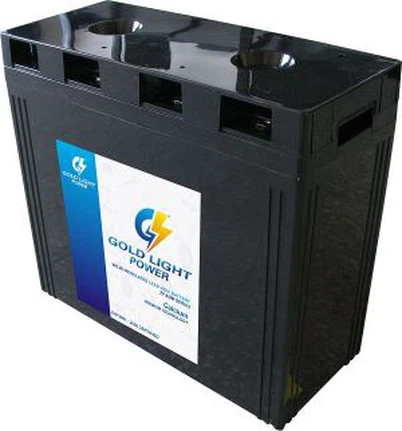
What is the state - of - charge of a dry battery?
Leave a message

The state-of-charge (SOC) of a dry battery is a crucial metric that indicates the amount of electrical energy remaining in the battery relative to its full capacity. As a dry battery supplier, understanding the concept of SOC is essential for both us and our customers. In this blog, we'll delve into what the state-of-charge of a dry battery means, how it's measured, and why it matters in various applications.
What is State-of-Charge?
The state-of-charge of a dry battery is essentially a percentage that represents the ratio of the available charge in the battery to its maximum charge capacity. For instance, if a dry battery has a SOC of 50%, it means that it currently holds half of its total possible charge. This metric is vital as it gives users an idea of how much longer the battery can power a device before it needs to be recharged or replaced.
Dry batteries come in various types, such as alkaline, lithium, and lead-acid, each with its own characteristics and ways of measuring SOC. However, the fundamental concept remains the same across all types: to provide an accurate indication of the battery's remaining energy.
Measuring the State-of-Charge
There are several methods to measure the state-of-charge of a dry battery. One of the most common methods is through voltage measurement. The voltage of a battery is directly related to its SOC. As a battery discharges, its voltage gradually decreases. By measuring the voltage of a dry battery, we can estimate its SOC. However, this method has its limitations as the relationship between voltage and SOC is not always linear, especially in some battery chemistries.
Another method is coulomb counting. This involves measuring the amount of charge that has been removed from or added to the battery. By keeping track of the current flowing in and out of the battery over time, we can calculate the remaining charge. Coulomb counting is more accurate than voltage measurement but requires more complex circuitry and calibration.
For more advanced applications, battery management systems (BMS) are used. A BMS can monitor various parameters of the battery, such as voltage, current, temperature, and internal resistance, to provide a more accurate and comprehensive assessment of the SOC. These systems are commonly used in electric vehicles and large-scale energy storage applications.
Importance of State-of-Charge in Different Applications
The state-of-charge of a dry battery is of utmost importance in various applications. In portable electronic devices like smartphones, laptops, and tablets, knowing the SOC helps users plan their usage and ensure that they don't run out of power at critical times. For example, if a user knows that their smartphone's battery has a low SOC, they can either recharge it or reduce their usage to conserve power.
In automotive applications, the SOC of a dry battery is crucial for the proper functioning of the vehicle. A car battery needs to have a sufficient SOC to start the engine, power the electrical systems, and support the vehicle's various functions. If the battery's SOC is too low, it may not be able to start the engine, leading to a breakdown. As a dry battery supplier, we offer high-quality automotive batteries such as the Dry Charged Auto Battery NS40 12V32Ah High Quality Car Battery and the 12v 55ah DIN Automotive Lead Acid Dry Charged Exteranl Storage Battery, which are designed to maintain a stable SOC and provide reliable performance.
In renewable energy systems, such as solar and wind power installations, dry batteries are used to store excess energy generated during peak production periods. Monitoring the SOC of these batteries is essential to ensure that the stored energy is used efficiently and that the batteries are not overcharged or over-discharged. Our Low Self Discharge High CCA Auto Battery 12V 45Ah DIN Standard Car Battery is suitable for such applications, offering a low self-discharge rate and high cold cranking amps (CCA) to ensure reliable operation.
Factors Affecting State-of-Charge
Several factors can affect the state-of-charge of a dry battery. Temperature is one of the most significant factors. Extreme temperatures, both hot and cold, can impact the battery's performance and reduce its SOC. High temperatures can accelerate the chemical reactions inside the battery, leading to faster self-discharge and a shorter lifespan. On the other hand, low temperatures can increase the internal resistance of the battery, making it more difficult to deliver power and reducing its effective SOC.
The rate of discharge also affects the SOC. If a battery is discharged at a high rate, it may experience a voltage drop and a reduction in its available charge. This is known as the Peukert effect, which states that the capacity of a battery decreases as the discharge rate increases.


In addition, the age and usage history of a battery can also influence its SOC. Over time, a battery's capacity may degrade, resulting in a lower SOC even when fully charged. Frequent deep discharges and overcharging can also damage the battery and reduce its overall performance.
Maintaining the State-of-Charge
To ensure that a dry battery maintains a healthy SOC, proper charging and discharging practices are essential. When charging a battery, it's important to use a charger that is compatible with the battery's chemistry and specifications. Overcharging can lead to overheating, gas generation, and damage to the battery. On the other hand, undercharging can result in a reduced SOC and a shorter lifespan.
During discharge, it's advisable to avoid deep discharges whenever possible. Deep discharges can cause irreversible damage to the battery and reduce its capacity over time. Instead, try to recharge the battery before it reaches a critically low SOC.
Regular maintenance and monitoring of the battery's SOC are also important. This can help detect any issues early on and take appropriate measures to ensure the battery's optimal performance.
Conclusion
In conclusion, the state-of-charge of a dry battery is a critical parameter that provides valuable information about the battery's remaining energy. As a dry battery supplier, we understand the importance of accurate SOC measurement and offer high-quality batteries that are designed to maintain a stable and reliable SOC. Whether it's for portable electronic devices, automotive applications, or renewable energy systems, our batteries are engineered to meet the diverse needs of our customers.
If you're interested in learning more about our dry batteries or have any questions regarding state-of-charge, we encourage you to contact us for a detailed discussion. Our team of experts is always ready to assist you in finding the right battery solutions for your specific requirements.
References
- Linden, D., & Reddy, T. B. (2002). Handbook of Batteries. McGraw-Hill.
- Koksbang, R., & Karden, E. (2013). Battery Management Systems in Electric and Hybrid Vehicles. John Wiley & Sons.
- Pistoia, G. (2010). Lithium Batteries: Basics and Applications. Springer.