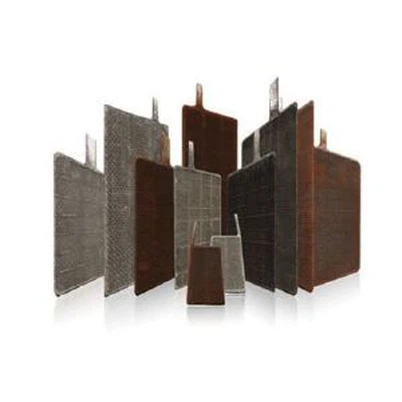
Do different battery chemistries have different types of plates?
Leave a message

Hey there! As a supplier of battery plates, I've been deep into the world of batteries for quite a while. One question that often pops up is, "Do different battery chemistries have different types of plates?" Well, let's dive right in and explore this topic.
First off, let's understand what battery chemistries are all about. Battery chemistry refers to the chemical reactions that take place inside a battery to produce electricity. There are several common battery chemistries out there, like lead - acid, lithium - ion, nickel - cadmium, and nickel - metal hydride. Each of these chemistries has its own unique characteristics, advantages, and disadvantages, and yes, they do have different types of plates.
Let's start with the lead - acid battery, which is one of the oldest and most widely used battery chemistries. Lead - acid batteries are commonly found in vehicles, backup power systems, and many other applications. In a lead - acid battery, the plates are typically made of lead and lead dioxide. The positive plate is made of lead dioxide (PbO₂), and the negative plate is made of pure lead (Pb). These plates are immersed in an electrolyte solution of sulfuric acid (H₂SO₄). When the battery is discharging, a chemical reaction occurs between the lead, lead dioxide, and sulfuric acid, producing lead sulfate (PbSO₄) on both plates and water. When the battery is charging, the reaction is reversed, and the lead sulfate is converted back to lead, lead dioxide, and sulfuric acid.
We offer Automotive Calcium Battery Plates Wet Battery Plates for Maintenance Free Car Battery. These plates are a variation of lead - acid battery plates. The addition of calcium to the lead alloy in these plates reduces water loss during charging, making them suitable for maintenance - free car batteries. They have better performance in terms of self - discharge rate and can last longer compared to traditional lead - acid battery plates.
Another type of lead - acid battery is the sealed calcium lead - acid battery. For this kind of battery, we have Sealed Calcium Lead Acid Battery Plates Unformatted for Vrla and UPS Battery. These plates are designed for valve - regulated lead - acid (VRLA) and uninterruptible power supply (UPS) batteries. The sealed design of these batteries means they don't require maintenance in terms of adding water, and the calcium - lead alloy plates help in improving the battery's charge acceptance and overall performance.

Now, let's move on to lithium - ion batteries. These are the powerhouses behind our smartphones, laptops, and electric vehicles. Lithium - ion battery plates are very different from lead - acid battery plates. The positive electrode (cathode) in a lithium - ion battery is usually made of a lithium metal oxide, such as lithium cobalt oxide (LiCoO₂), lithium manganese oxide (LiMn₂O₄), or lithium iron phosphate (LiFePO₄). The negative electrode (anode) is typically made of graphite. During charging, lithium ions move from the cathode to the anode through an electrolyte, and during discharging, the lithium ions move back to the cathode.
The advantage of lithium - ion batteries is their high energy density, which means they can store a lot of energy in a relatively small and lightweight package. They also have a low self - discharge rate and a long cycle life. However, they are more expensive to manufacture compared to lead - acid batteries, and they require sophisticated battery management systems to ensure safe operation.

Nickel - cadmium (Ni - Cd) batteries are another type of rechargeable battery. In a Ni - Cd battery, the positive plate is made of nickel hydroxide (Ni(OH)₂), and the negative plate is made of cadmium (Cd). These batteries were once very popular, especially in portable electronics. They have a relatively high discharge rate and can operate in a wide range of temperatures. However, cadmium is a toxic heavy metal, which has led to a decline in the use of Ni - Cd batteries due to environmental concerns.
Nickel - metal hydride (Ni - MH) batteries are a more environmentally friendly alternative to Ni - Cd batteries. The positive plate in a Ni - MH battery is similar to that of a Ni - Cd battery, made of nickel hydroxide. The negative plate is made of a metal hydride alloy. Ni - MH batteries have a higher energy density than Ni - Cd batteries and are less toxic. They are commonly used in digital cameras, cordless phones, and other consumer electronics.
So, as you can see, different battery chemistries do indeed have different types of plates. Each type of plate is designed to work with the specific chemical reactions and requirements of its corresponding battery chemistry.
If you're in the market for high - quality battery plates, whether it's for automotive, industrial, or consumer applications, we've got you covered. Our plates are made with the highest quality materials and advanced manufacturing processes to ensure optimal performance and durability. We understand that every customer has unique needs, and we're committed to providing customized solutions to meet those needs.
If you're interested in learning more about our battery plates or want to start a procurement discussion, feel free to reach out. We're always happy to chat and help you find the best battery plate solution for your project.
References
- Linden, D., & Reddy, T. B. (2002). Handbook of Batteries. McGraw - Hill.
- Gregory, D. P. (2017). Battery Technology Handbook. Elsevier.